
1 / 10
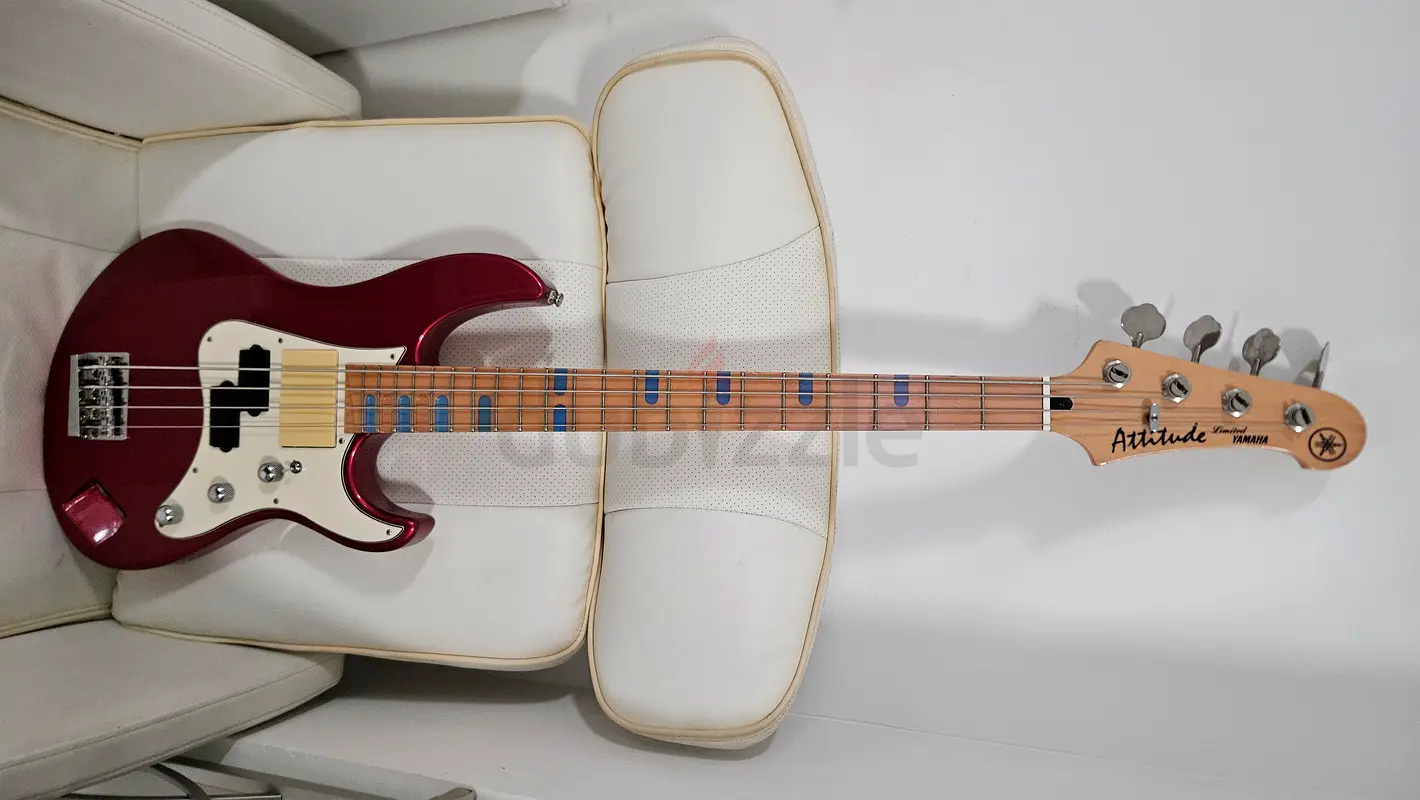
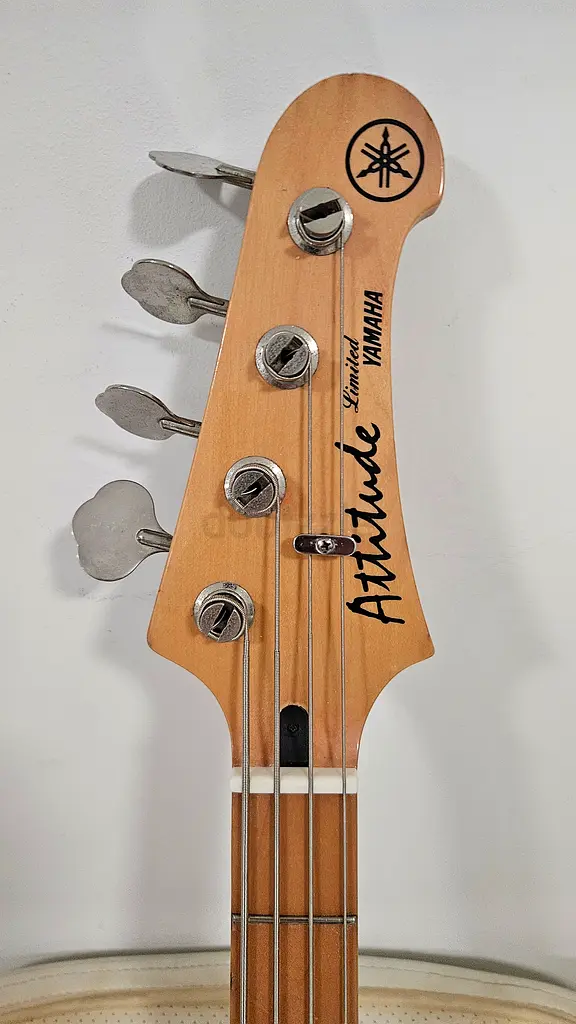
Rare Billy Sheehan Yamaha Attitude Limited 1 Signature Bass
AED 10,000

Item Details
Brand
Yamaha
Age
10+ years
Condition
A bit of wear and tear, but in good working condition
Usage
Used an average amount, as frequently as would be expected
Posted on: 12th May 2026
Description
Rare Billy Sheehan Yamaha Attitude Limited 1 Signature Bass
Selling for 10,000 aed
Only 150 Made in this color
Here is a first-generation Yamaha Attitude Limited in Thunder Blue. They only made 150 in blue and 150 in red, so the name "Limited" isn't just marketing hype in this case.
There are a million Limited II and III models around...but the original is still the best! These first generation models had the original neck joint developed by Rich Lasner, who is best known as the designer of the Ibanez RG line of guitars. The $%&! of the neck is bolted to a block of milled, billet aluminum that's seated deep into the body. The idea is to eliminate the neck heel, while at the same time offering rock-solid stability (especially lateral stability). It really works. Later neck joints were thicker with a noticeable heel; the billet aluminum was replaced by merely an extension of the neck wood. It's a cost-cutting measure compared to the no-compromise nature of the original neck joint.
The Attitude Limited is grossly misunderstood. People assume it's a one-trick pony that will only give you that buzzy, midrangey Billy Sheehan tone. Or that it must be somehow set up for tapping and therefore useless as a normal bass. But none of that is true.
It's essentially a hot-rodded PBass. The neck profile is modeled after an early-'50s PBass: wide, thick, and round. But you have unrestricted access to the upper frets and zero neck play. You've got a DiMarzio "Will Power" pickup, which is a variant of the classic "Model P" only with slightly more prominent mids. This is the classic, barky PBass rock tone. Then there's DiMarzio "Model One" in the neck position, which is basically a Gibson mudbucker that's a bit louder and cleaner.
You can blend the two signals to fill in some of the deep low-end that's missing with split-coil PBasses. Or, switch between a thumpy Gibson EBO tone and the punchy PBass tone on the fly. But the real magic happens when you split the signals and send each pickup to different amps/channels or process them through separate EQ/effects chains. You can put the neck pickup through a compressor and octave pedal, as if you're doubling a synth bass under your PBass. You can add overdrive, chorus, phaser, etc. to the PBass pickup, but keep your neck pickup clean to avoid losing any bottom end.
The rest of the bass is full of interesting details. The frets get smaller as you move down toward the end of the fingerboard for more precise intonation. The board is partially scalloped at the last few frets so you can get your fingers underneath for string bending. It comes with a Hipshot X-tender to drop tune the E-string.
Selling for 10,000 aed
Only 150 Made in this color
Here is a first-generation Yamaha Attitude Limited in Thunder Blue. They only made 150 in blue and 150 in red, so the name "Limited" isn't just marketing hype in this case.
There are a million Limited II and III models around...but the original is still the best! These first generation models had the original neck joint developed by Rich Lasner, who is best known as the designer of the Ibanez RG line of guitars. The $%&! of the neck is bolted to a block of milled, billet aluminum that's seated deep into the body. The idea is to eliminate the neck heel, while at the same time offering rock-solid stability (especially lateral stability). It really works. Later neck joints were thicker with a noticeable heel; the billet aluminum was replaced by merely an extension of the neck wood. It's a cost-cutting measure compared to the no-compromise nature of the original neck joint.
The Attitude Limited is grossly misunderstood. People assume it's a one-trick pony that will only give you that buzzy, midrangey Billy Sheehan tone. Or that it must be somehow set up for tapping and therefore useless as a normal bass. But none of that is true.
It's essentially a hot-rodded PBass. The neck profile is modeled after an early-'50s PBass: wide, thick, and round. But you have unrestricted access to the upper frets and zero neck play. You've got a DiMarzio "Will Power" pickup, which is a variant of the classic "Model P" only with slightly more prominent mids. This is the classic, barky PBass rock tone. Then there's DiMarzio "Model One" in the neck position, which is basically a Gibson mudbucker that's a bit louder and cleaner.
You can blend the two signals to fill in some of the deep low-end that's missing with split-coil PBasses. Or, switch between a thumpy Gibson EBO tone and the punchy PBass tone on the fly. But the real magic happens when you split the signals and send each pickup to different amps/channels or process them through separate EQ/effects chains. You can put the neck pickup through a compressor and octave pedal, as if you're doubling a synth bass under your PBass. You can add overdrive, chorus, phaser, etc. to the PBass pickup, but keep your neck pickup clean to avoid losing any bottom end.
The rest of the bass is full of interesting details. The frets get smaller as you move down toward the end of the fingerboard for more precise intonation. The board is partially scalloped at the last few frets so you can get your fingers underneath for string bending. It comes with a Hipshot X-tender to drop tune the E-string.
Location
Al Nahda 1, Al Nahda (Dubai), Dubai, UAE

- Accounting / Finance
- Automobile
- Beauty / Salon
- Cleaner / Housekeeper
- Construction
- Cook / Chef
- Customer Service / Call Centre
- Data Management & Analysis
- Design
- Driver / Delivery
- Education
- Engineering
- Event Management & Operations
- Handyman / Technician
- HR / Admin
- Information Technology
- Legal Services
- Logistics & Distribution
- Manufacturing / Warehouse
- Marine Captain / Crew
- Marketing / Advertising
- Media, Art & Entertainment
- Medical / Healthcare
- Real Estate
- Restaurant Operations
- Sales / Business Development
- Secretarial / Front Office
- Security / Guard
- Sports & Fitness
- Travel & Hospitality
- Others
- Jobs Wanted
- Electronics
- Computers & Networking
- Business & Industrial
- Home Appliances
- Sports Equipment
- Clothing & Accessories
- Cameras & Imaging
- Jewelry & Watches
- Pets
- Musical Instruments
- Gaming
- Baby Items
- Toys
- Tickets & Vouchers
- Collectibles
- Books
- Music
- Free Stuff
- Lost/Found
- DVDs & Movies
- Furniture, Home & Garden
- Mobile Phones & Tablets
العربية