
1 / 3
WWI German Commemorative 1915 (Lusitania Medal) - With Original Box
AED 495

Item Details
Age
Brand New
Condition
Perfect inside and out
Usage
Still in original packaging
Posted on: 18th July 2026
Description
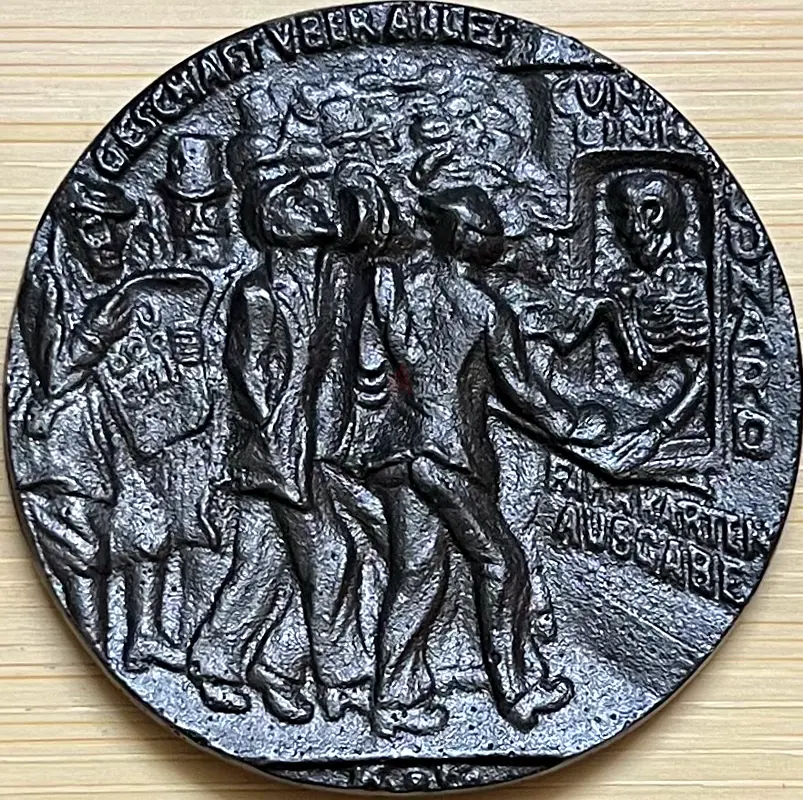
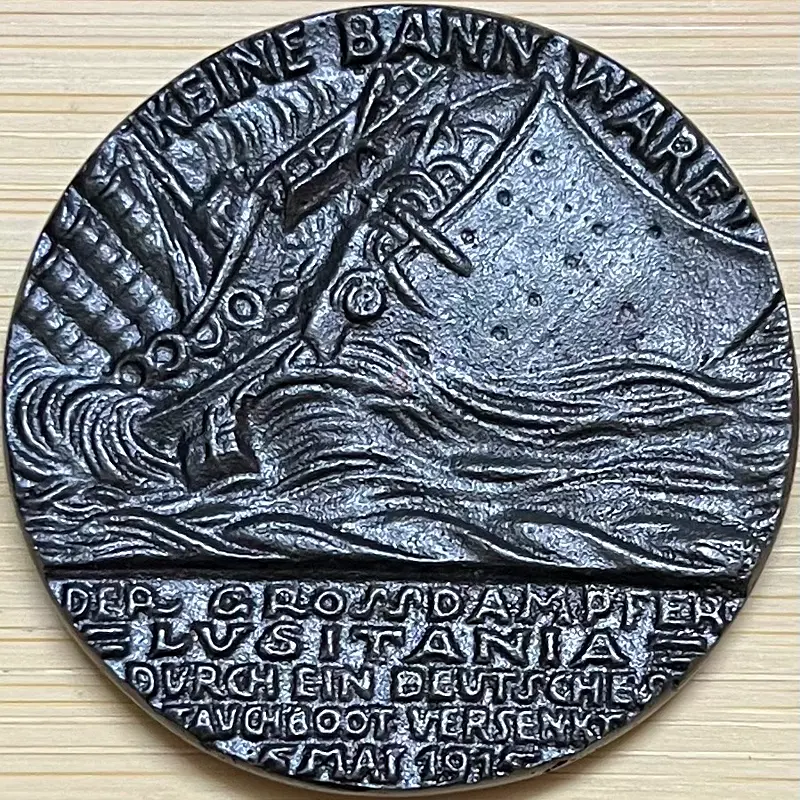
propaganda medal known as the Lusitania Medal, originally created by German artist Karl Goetz in 1915 after the sinking of the RMS Lusitania. Here’s a breakdown of each side:
⸻
Side 1 (with skeleton and crowd)
• Text at top: “GESCHÄFT ÜBER ALLES” — “Business above all”
• Imagery: Shows passengers lining up at a ticket window manned by Death (skeleton), referencing how tickets were sold despite the danger.
• Additional text: “U-BOOTS-GEFAHR” (U-boat danger), “FAHRKARTEN AUSGABE” (ticket office).
• Interpretation: This side criticizes the British and Cunard Line for risking civilian lives despite warnings of submarine warfare.
⸻
Side 2 (sinking ship)
• Text at top: “KEINE BANNWARE” — “No contraband”
• Imagery: The Lusitania sinking, listing over with cargo spilling out (suggesting it carried munitions).
• Text below:
“DER GROSSDAMPFER LUSITANIA DURCH EIN DEUTSCHES TAUCHBOOT VERSENKT 5 MAI 1915” —
“The large steamer Lusitania sunk by a German submarine, 5 May 1915.”
• Historical note: The actual sinking was on May 7, 1915; Goetz mistakenly inscribed May 5 on his original dies.
⸻
Historical background
• The RMS Lusitania was a British ocean liner sunk by a German U-boat, causing a major outcry because of the loss of civilian lives.
• Goetz designed this medal to highlight British hypocrisy and to suggest that the ship was carrying war contraband.
• After the medal became infamous, the British made copies for propaganda purposes to inflame anti-German sentiment.
⸻
Side 1 (with skeleton and crowd)
• Text at top: “GESCHÄFT ÜBER ALLES” — “Business above all”
• Imagery: Shows passengers lining up at a ticket window manned by Death (skeleton), referencing how tickets were sold despite the danger.
• Additional text: “U-BOOTS-GEFAHR” (U-boat danger), “FAHRKARTEN AUSGABE” (ticket office).
• Interpretation: This side criticizes the British and Cunard Line for risking civilian lives despite warnings of submarine warfare.
⸻
Side 2 (sinking ship)
• Text at top: “KEINE BANNWARE” — “No contraband”
• Imagery: The Lusitania sinking, listing over with cargo spilling out (suggesting it carried munitions).
• Text below:
“DER GROSSDAMPFER LUSITANIA DURCH EIN DEUTSCHES TAUCHBOOT VERSENKT 5 MAI 1915” —
“The large steamer Lusitania sunk by a German submarine, 5 May 1915.”
• Historical note: The actual sinking was on May 7, 1915; Goetz mistakenly inscribed May 5 on his original dies.
⸻
Historical background
• The RMS Lusitania was a British ocean liner sunk by a German U-boat, causing a major outcry because of the loss of civilian lives.
• Goetz designed this medal to highlight British hypocrisy and to suggest that the ship was carrying war contraband.
• After the medal became infamous, the British made copies for propaganda purposes to inflame anti-German sentiment.
Location
Al Karama, Dubai, UAE

- Accounting / Finance
- Automobile
- Beauty / Salon
- Cleaner / Housekeeper
- Construction
- Cook / Chef
- Customer Service / Call Centre
- Data Management & Analysis
- Design
- Driver / Delivery
- Education
- Engineering
- Event Management & Operations
- Handyman / Technician
- HR / Admin
- Information Technology
- Legal Services
- Logistics & Distribution
- Manufacturing / Warehouse
- Marine Captain / Crew
- Marketing / Advertising
- Media, Art & Entertainment
- Medical / Healthcare
- Real Estate
- Restaurant Operations
- Sales / Business Development
- Secretarial / Front Office
- Security / Guard
- Sports & Fitness
- Travel & Hospitality
- Others
- Jobs Wanted
- Electronics
- Computers & Networking
- Business & Industrial
- Home Appliances
- Sports Equipment
- Clothing & Accessories
- Cameras & Imaging
- Jewelry & Watches
- Pets
- Musical Instruments
- Gaming
- Baby Items
- Toys
- Tickets & Vouchers
- Collectibles
- Books
- Music
- Free Stuff
- Lost/Found
- DVDs & Movies
- Furniture, Home & Garden
- Mobile Phones & Tablets
العربية