
1 / 10
Antique Omani Khanjar
AED 4,000
Item Details
Age
10+ years
Condition
Almost no noticeable problems or flaws
Usage
Still in original packaging
Posted on: 19th April 2026
Description
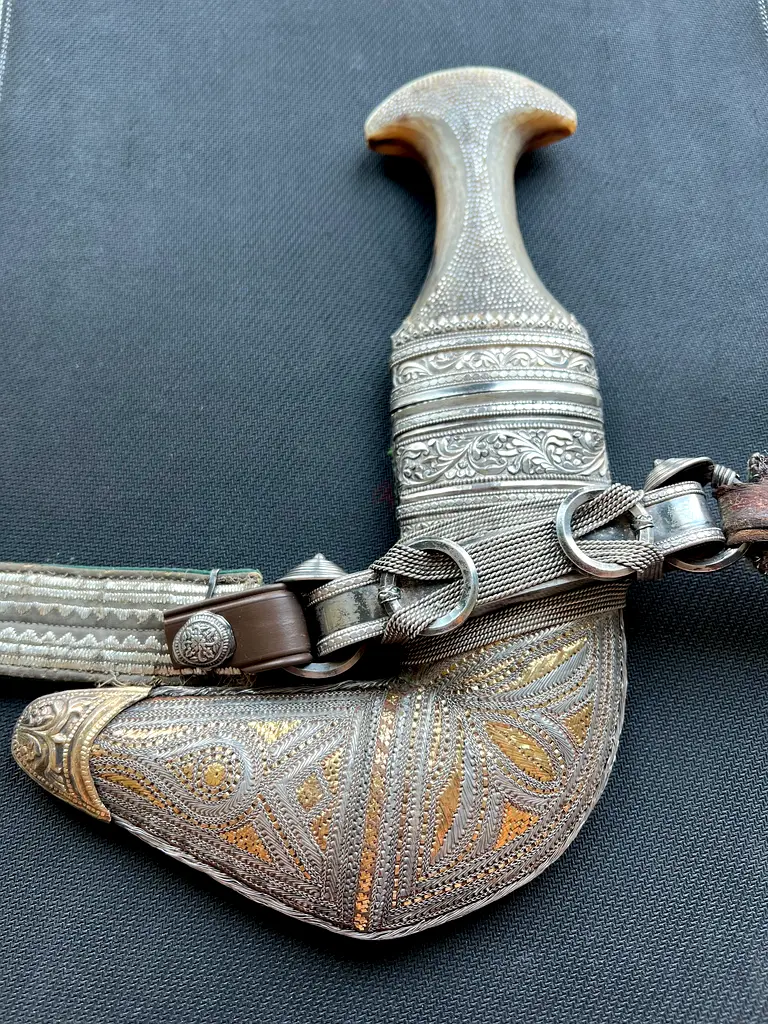
A gorgeous traditional Omani Khanjar (Antique Jambiya / Arabic Dagger)
The Al Nizwani khanjar is named after Nizwa, which is located in the Ad Dakhliah governorate of the Sultanate. Nizwa was and still is a famous artisan market for the manufacture of Omani khanjars and it is often where artisans are based.
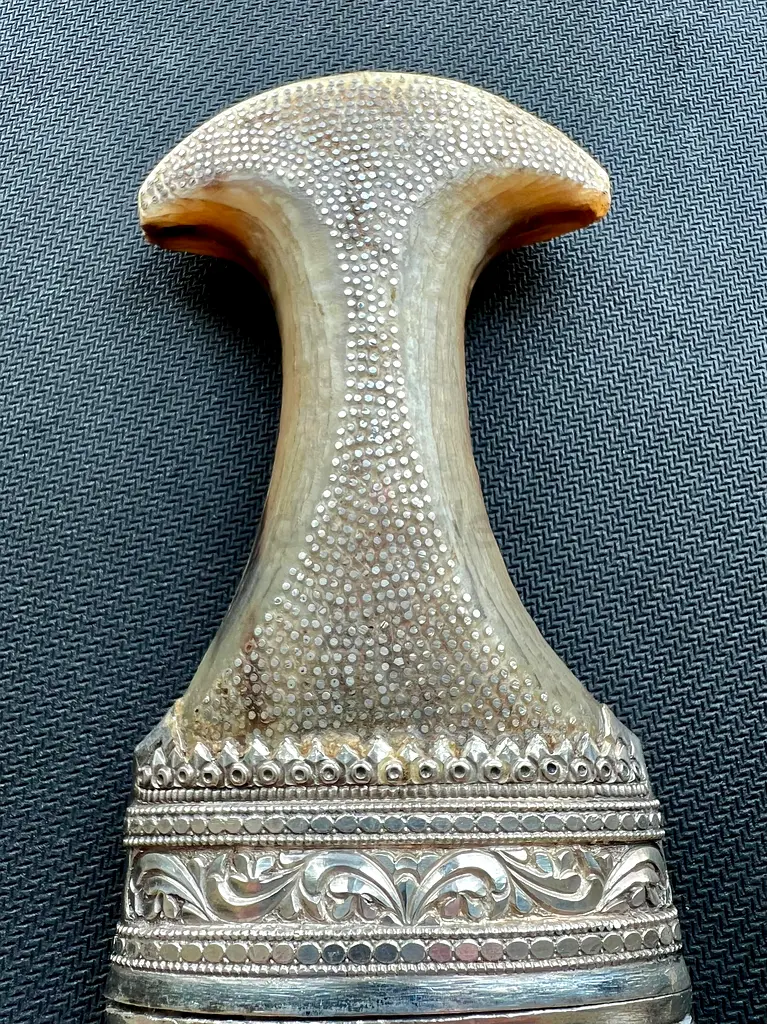
This traditional dagger, dating from the late 19th century with an aged horn hilt and silver ornamental nails forming a pattern on the T-shaped pommel and has unique silver and gold ribbon wireworks.
Overall, it is made of silver & gold plated parts and decorated with intricate Filigree Sheath (a protective cover). Filigree is a jewelry-making technique using thin, twisted threads of precious metal, such as Gold & Silver, to create delicate, artistic designs and pattern on the outer surface. The sheath is a protective inner covering, made of leather and metal, designed to hold the dagger.
The two Scabbard mounts are essential for securing the dagger to a belt. The dagger comes with its original, decorated leather belt.
The features of the handle are distinguished by its elegant design, it makes it easier to hold. This dagger is worn by men and is usually used in special celebrations and events.
The traditional Khanjar is a symbol of manpower. The double-edged steel blade is short and curved, essentially shaped like the English letter “J” and firmly attached to the handle. These blades being largely ceremonial, the blades were not really intended for practical use and should not be evaluated as such.
While the khanjar is the most common in Oman, due to its symbolic status, similar daggers are also worn by men in Yemen and the United Arab Emirates, which are an integral part of the “traditional attire” in these countries.
It is a collectible item that would be a great addition to any sword or knife collection. It is also used as a decoration for homes. Moreover, it is a beautifully and attractively crafted gift or souvenir.
This highly elaborate & meticulous piece speaks of their social purpose, hearkening back to the days when much of Omani was ruled by elites from different tribes. Serving a similar ornamental and social purpose as jewellery, these Khanjars were prized by Omani rulers and were worn belted over robes at gatherings, weddings and other ceremonies.
More photos are available on request.
Viewing can be arranged upon request in Dubai. Only Serious Cash Buyers!
The Al Nizwani khanjar is named after Nizwa, which is located in the Ad Dakhliah governorate of the Sultanate. Nizwa was and still is a famous artisan market for the manufacture of Omani khanjars and it is often where artisans are based.
This traditional dagger, dating from the late 19th century with an aged horn hilt and silver ornamental nails forming a pattern on the T-shaped pommel and has unique silver and gold ribbon wireworks.
Overall, it is made of silver & gold plated parts and decorated with intricate Filigree Sheath (a protective cover). Filigree is a jewelry-making technique using thin, twisted threads of precious metal, such as Gold & Silver, to create delicate, artistic designs and pattern on the outer surface. The sheath is a protective inner covering, made of leather and metal, designed to hold the dagger.
The two Scabbard mounts are essential for securing the dagger to a belt. The dagger comes with its original, decorated leather belt.
The features of the handle are distinguished by its elegant design, it makes it easier to hold. This dagger is worn by men and is usually used in special celebrations and events.
The traditional Khanjar is a symbol of manpower. The double-edged steel blade is short and curved, essentially shaped like the English letter “J” and firmly attached to the handle. These blades being largely ceremonial, the blades were not really intended for practical use and should not be evaluated as such.
While the khanjar is the most common in Oman, due to its symbolic status, similar daggers are also worn by men in Yemen and the United Arab Emirates, which are an integral part of the “traditional attire” in these countries.
It is a collectible item that would be a great addition to any sword or knife collection. It is also used as a decoration for homes. Moreover, it is a beautifully and attractively crafted gift or souvenir.
This highly elaborate & meticulous piece speaks of their social purpose, hearkening back to the days when much of Omani was ruled by elites from different tribes. Serving a similar ornamental and social purpose as jewellery, these Khanjars were prized by Omani rulers and were worn belted over robes at gatherings, weddings and other ceremonies.
More photos are available on request.
Viewing can be arranged upon request in Dubai. Only Serious Cash Buyers!
Location
Al Furjan, Dubai, UAE

- Accounting / Finance
- Automobile
- Beauty / Salon
- Cleaner / Housekeeper
- Construction
- Cook / Chef
- Customer Service / Call Centre
- Data Management & Analysis
- Design
- Driver / Delivery
- Education
- Engineering
- Event Management & Operations
- Handyman / Technician
- HR / Admin
- Information Technology
- Legal Services
- Logistics & Distribution
- Manufacturing / Warehouse
- Marine Captain / Crew
- Marketing / Advertising
- Media, Art & Entertainment
- Medical / Healthcare
- Real Estate
- Restaurant Operations
- Sales / Business Development
- Secretarial / Front Office
- Security / Guard
- Sports & Fitness
- Travel & Hospitality
- Others
- Jobs Wanted
- Electronics
- Computers & Networking
- Business & Industrial
- Home Appliances
- Sports Equipment
- Clothing & Accessories
- Cameras & Imaging
- Jewelry & Watches
- Pets
- Musical Instruments
- Gaming
- Baby Items
- Toys
- Tickets & Vouchers
- Collectibles
- Books
- Music
- Free Stuff
- Lost/Found
- DVDs & Movies
- Furniture, Home & Garden
- Mobile Phones & Tablets
العربية