
1 / 1
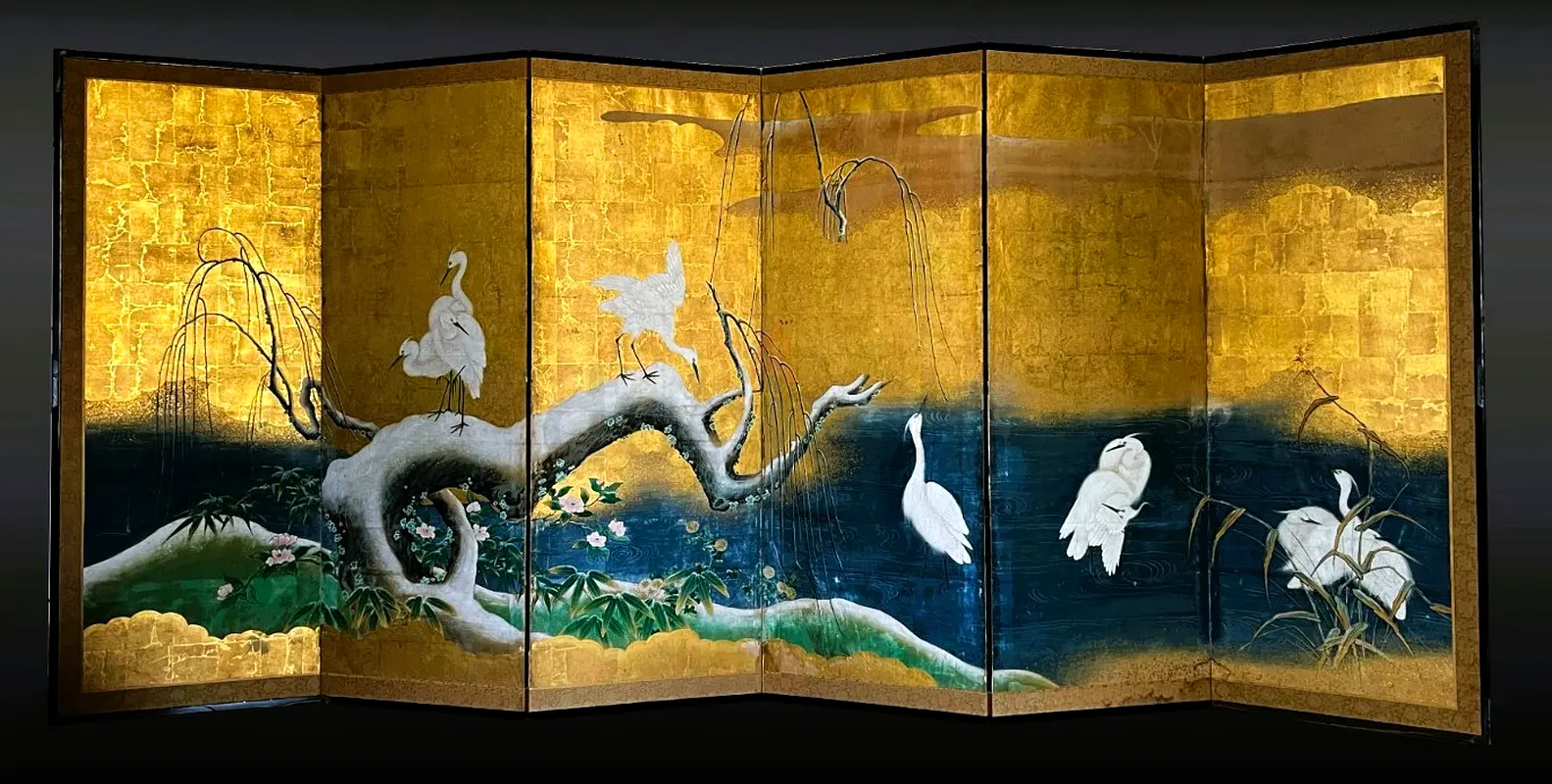
Japanese Gold Leaf Six-Panel Folding Screen (Byōbu) – Herons, 19th Century
AED 95,000

Item Details
Age
10+ years
Condition
Almost no noticeable problems or flaws
Usage
Used an average amount, as frequently as would be expected
Posted on: 20th May 2026
Description
A rare and exceptionally well-preserved six-panel Japanese folding screen (byōbu) dating from the mid-19th century, painted in the Kanō-school style. Originally acquired in 1992 from Naga Antiques, New York, one of the leading international dealers in Japanese art (invoice available).
The Kanō school is the most influential lineage in Japanese painting, active for more than 300 years and patronised by the imperial court, daimyō families and major Zen temples. Works in this tradition are celebrated for their refined technique, balanced compositions and masterful use of gold leaf.
This screen depicts herons standing in a snowy landscape, painted with mineral pigments on a rich gold-leaf ground and bordered with traditional silk brocade. The combination of scale, craftsmanship and subject matter makes it an exceptional piece for private collectors, luxury interiors or gallery display.
Details
• Period: Mid-19th Century (circa 1850)
• Origin: Japan
• Medium: Mineral pigments on gold leaf with silk brocade border
• Structure: Six joined panels
• Dimensions: 170 cm (H) × 376 cm (W) × 2 cm (D)
• Condition: Excellent, with minimal age-related wear
This is a museum-quality artwork, not a decorative reproduction. Comparable large gold-leaf screens sell internationally in the USD 50,000–100,000 range.
Serious collectors or knowledgeable buyers only, please.
The Kanō school is the most influential lineage in Japanese painting, active for more than 300 years and patronised by the imperial court, daimyō families and major Zen temples. Works in this tradition are celebrated for their refined technique, balanced compositions and masterful use of gold leaf.
This screen depicts herons standing in a snowy landscape, painted with mineral pigments on a rich gold-leaf ground and bordered with traditional silk brocade. The combination of scale, craftsmanship and subject matter makes it an exceptional piece for private collectors, luxury interiors or gallery display.
Details
• Period: Mid-19th Century (circa 1850)
• Origin: Japan
• Medium: Mineral pigments on gold leaf with silk brocade border
• Structure: Six joined panels
• Dimensions: 170 cm (H) × 376 cm (W) × 2 cm (D)
• Condition: Excellent, with minimal age-related wear
This is a museum-quality artwork, not a decorative reproduction. Comparable large gold-leaf screens sell internationally in the USD 50,000–100,000 range.
Serious collectors or knowledgeable buyers only, please.
Location
Jumeirah Beach Residence (JBR), Dubai, UAE

- Accounting / Finance
- Automobile
- Beauty / Salon
- Cleaner / Housekeeper
- Construction
- Cook / Chef
- Customer Service / Call Centre
- Data Management & Analysis
- Design
- Driver / Delivery
- Education
- Engineering
- Event Management & Operations
- Handyman / Technician
- HR / Admin
- Information Technology
- Legal Services
- Logistics & Distribution
- Manufacturing / Warehouse
- Marine Captain / Crew
- Marketing / Advertising
- Media, Art & Entertainment
- Medical / Healthcare
- Real Estate
- Restaurant Operations
- Sales / Business Development
- Secretarial / Front Office
- Security / Guard
- Sports & Fitness
- Travel & Hospitality
- Others
- Jobs Wanted
- Electronics
- Computers & Networking
- Business & Industrial
- Home Appliances
- Sports Equipment
- Clothing & Accessories
- Cameras & Imaging
- Jewelry & Watches
- Pets
- Musical Instruments
- Gaming
- Baby Items
- Toys
- Tickets & Vouchers
- Collectibles
- Books
- Music
- Free Stuff
- Lost/Found
- DVDs & Movies
- Furniture, Home & Garden
- Mobile Phones & Tablets
العربية